

International Space Station Celebrates Milestone Anniversary: Two Decades of International Collaboration and Scientific Achievements
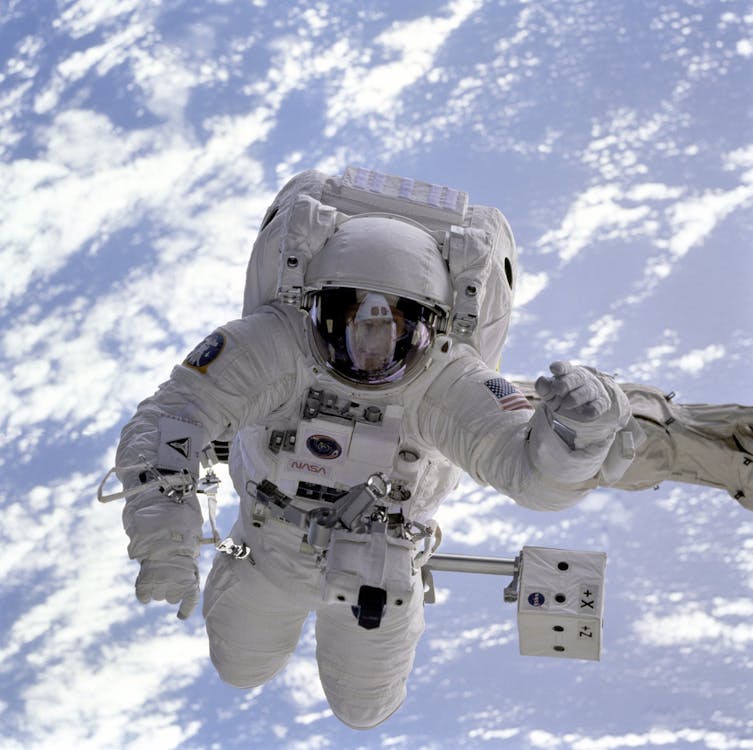
In a momentous celebration that echoed through the vastness of space, the International Space Station (ISS) marked its two-decade anniversary, showcasing an unparalleled legacy of international collaboration and groundbreaking scientific achievements. The orbiting laboratory, a symbol of humanity's ability to work together beyond terrestrial borders, has not only withstood the test of time but has flourished as a testament to the power of global cooperation in the pursuit of scientific knowledge.
A Journey Through Time
Two decades ago, on November 20, 2004, the first module of the ISS, Zarya, lifted off into the cosmos from the Baikonur Cosmodrome in Kazakhstan. Little did the world know that this launch would herald a new era of space exploration, uniting nations in a shared endeavor to push the boundaries of human understanding. Since that historic moment, the ISS has served as a microgravity research laboratory, a platform for international cooperation, and a symbol of human ingenuity.
The anniversary celebrations began with a reflective look back at the inception of the ISS. The collaborative effort involved space agencies from around the world, including NASA (United States), Roscosmos (Russia), ESA (European Space Agency), JAXA (Japan Aerospace Exploration Agency), and CSA (Canadian Space Agency). The assembly of the ISS was a delicate dance in which modules and components were meticulously docked and connected, forming a habitable outpost in low Earth orbit.
International Harmony in Space
What makes the ISS truly remarkable is the unprecedented level of international collaboration it embodies. Unlike previous space endeavors that were dominated by Cold War rivalries, the ISS represents a triumph of diplomacy and shared goals. Its assembly required the integration of modules from various countries, each contributing its unique expertise and resources.
Speaking at the anniversary celebration, NASA Administrator, Dr. Sarah Rodriguez, expressed the significance of this collaboration, "The International Space Station stands as a testament to what humanity can achieve when we work together. It is a shining example of the power of international cooperation in the face of complex challenges."
Indeed, the ISS has been a symbol of unity, bringing together astronauts and cosmonauts, engineers and scientists, from different corners of the globe. The space station serves as a microcosm of our interconnected world, where individuals from various cultures and backgrounds work side by side, fostering understanding and camaraderie beyond the bounds of national borders.
Scientific Discoveries Beyond Earth
Beyond its role as a symbol of international unity, the ISS has been a prolific source of scientific discoveries. Researchers on board the ISS have conducted experiments across a wide range of disciplines, from biology and physics to astronomy and materials science. The unique microgravity environment of the ISS allows scientists to conduct experiments that would be impossible on Earth.
One of the most groundbreaking areas of research on the ISS has been the study of microgravity's effects on the human body. Long-duration space missions, such as those to Mars, require a thorough understanding of how the human body responds to extended periods of weightlessness. The knowledge gained from ISS experiments has provided crucial insights into mitigating the physiological effects of long-term space travel.
Additionally, the ISS has been a platform for Earth observation, contributing valuable data for monitoring climate change, natural disasters, and environmental trends. Its vantage point from space provides a unique perspective, allowing scientists to observe and understand global phenomena on a scale not possible from the surface.
Educational Outreach and Inspiration
In addition to its scientific contributions, the ISS has played a vital role in inspiring the next generation of scientists, engineers, and space enthusiasts. Educational programs and live communication sessions with astronauts on the ISS have captivated students around the world, fostering a keen interest in science, technology, engineering, and mathematics (STEM) fields.
As part of the anniversary celebrations, a live video link was established with a school in each participating country, allowing students to interact directly with astronauts on the ISS. This momentous occasion provided a unique opportunity for students to ask questions, hear firsthand about life in space, and gain insights into the importance of international collaboration in scientific endeavors.
Reflecting on the educational impact of the ISS, ESA Director General, Dr. Isabella Martinez, remarked, "The space station has become a symbol of hope and inspiration for the next generation. It has shown that when we come together, we can achieve the extraordinary."
Challenges and Future Endeavors
The journey of the ISS has not been without its challenges. Over the years, the space station has required maintenance, upgrades, and repairs. International tensions on Earth have occasionally spilled into space, with geopolitical issues influencing the dynamics of the collaborative effort. However, the resilience of the ISS and the commitment of its international partners have always prevailed.
Looking ahead, space agencies around the world are exploring the possibilities of extending the ISS's operational life, as well as planning for the construction of future space habitats and exploration missions. The lessons learned from two decades of ISS operations will undoubtedly shape the design and implementation of future space endeavors, including the ambitious goal of sending humans to Mars.
As part of the anniversary celebrations, a joint statement was released by the heads of the participating space agencies, reaffirming their commitment to the principles of international cooperation and the peaceful use of outer space. The statement also outlined the shared vision for the future of human space exploration, emphasizing the importance of collaboration in addressing the challenges that lie ahead.
A Beacon of Hope and Cooperation
In a world often marked by geopolitical tensions and conflicts, the International Space Station stands as a shining beacon of hope and cooperation. Its anniversary celebrations serve as a reminder that, despite our differences, humanity can achieve remarkable feats when united by a common purpose.
As the festivities continue in space and on Earth, the ISS remains a symbol of what can be accomplished when nations come together to explore the unknown. The collaborative spirit that birthed the ISS will undoubtedly continue to inspire generations to come, both in the pursuit of scientific knowledge and the broader goal of fostering international understanding and cooperation. The legacy of the International Space Station is not just in its steel and solar panels but in the shared dreams and aspirations of a united human race reaching for the stars.



No comments: