

Death row has a racial history. Evidence suggests that hasn't altered in SC.
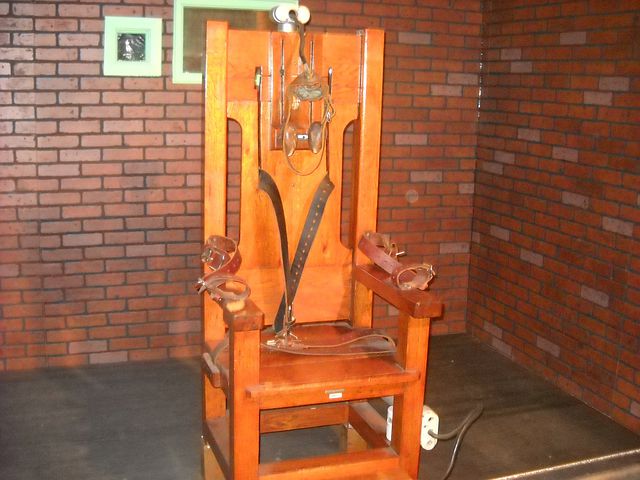
35 people are currently on death row in South Carolina as the state files a lawsuit to utilise the electric chair instead of the firing squad, a procedure that hasn't been employed in modern times, and against the backdrop of growing opposition to the death penalty across the country.
In 1983, Fred Singleton, then 39, is set to go on trial. He's 77 now.
Death row has a notoriously racist history. Historically, it has been disproportionately applied to Black men, and it is most frequently employed on victims who are White. Even after receiving the irrevocable punishment, several persons who were given the death penalty have since been found innocent.
A tiny number of prosecutors frequently seek the death penalty in South Carolina and other jurisdictions, and their actions are frequently motivated by exaggerated claims or a desire to seem tough on crime.
Not to mention that the death sentence was declared illegal by the U.S. Supreme Court in the historic case of Furman v. Georgia 50 years ago, setting off decades of debate and injustice.
Following a study of the 35 men on death row's cases, The Greenville News discovered the following:
People of colour make up more than half of the men on death row.
Four counties hosted the trials for over half of the 35 cases on death row. A death penalty case has never been tried in the state's ten counties in the modern era.
Four solicitors prosecuted 14 of the 35 individuals on execution row.
The majority of the prisoners who are currently on death row received their sentences in the early and middle of the 2000s. Since 2010, only three further men have been placed on death row.
A total of 35 men are on death row, and 14 of them have been there for 20 years or longer. One has spent about half of his 77 years—38 years—on death row.
The Supreme Court had to decide in 1972 whether the Eighth and Fourteenth Amendments prohibited the death penalty as a kind of cruel and unusual punishment.
The court concluded that yes was the correct answer in a one-page joint opinion. Numerous complex viewpoints on the long-debated form of punishment were articulated over hundreds of pages of individual opinions and dissents.
Continuing the story
The judges agreed that the death sentence was frequently applied in an arbitrary and racially prejudiced manner toward Black defendants. They were unable to determine why certain offenders received death sentences while others did not. According to Justices William Brennan and Thurgood Marshall, the procedure is unlawful under any circumstances.
The death penalty was no longer an option.
But in reaction, states changed their capital punishment laws and sentencing guidelines in an effort to apply the death penalty in less arbitrary ways. Only four years later, in Gregg v. Georgia, was it brought up again.
The state Supreme Court of Georgia used new procedures to compare death sentences to those in similar cases in order to determine whether the death penalty was excessive. Georgia's new statute specifically established a two-fold process where the criminal trial and sentencing are conducted separately. The Supreme Court decided that when used properly, the death sentence does not contravene the Constitution by a vote of 7-2.
The practise was revived and entered what specialists in criminal justice refer to as the "modern age" of the death sentence.
In 1977, South Carolina implemented a comparable two-step procedure and revised death penalty guidelines. The state Supreme Court affirmed the law and said that the requirement for an appeals procedure acted as "an additional safeguard against the imposition of the death punishment at random."
As the South Carolina Department of Corrections struggles to get lethal injection medications, the state has executed 43 individuals since 1985 but none in the last ten years. However, despite its legal efforts to install the firing squad and switch the remaining inmates on death row to the electric chair, the state is fighting to maintain the death sentence.
Racial Bias' Long-lasting Roots on Death Row
According to a research from the Death Penalty Information Center, capital punishment was employed to control Black populations during slavery and was often used in public in Southern states after the Civil War, usually appearing to be lynchings.
The final public execution took place in Kentucky in August 1936 when 26-year-old Black man Rainey Bethea was hanged after being charged with raping and killing an elderly white woman. There were about 20,000 individuals present.
In spite of African Americans making up only 22% of the population between 1910 and 1950, the Equal Justice Initiative, a nonprofit organisation that offers legal representation to those who have been wrongfully sentenced or wrongfully convicted, claims that 75% of people executed in the South were Black.
In the 1940s and 1950s, the NAACP's Legal Defense Fund (LDF) launched a campaign to argue that the death sentence is racially unfair and unconstitutional. In the end, this effort resulted in the 1972 Furman decision by the US Supreme Court.
Although concerns about racial prejudice were raised in the justice judgments for Furman, the main problem was the arbitrary use and unrestrained discretion in the legal process of the death penalty.
To file an appeal with the court, at least 35 states revised their capital punishment laws. Separate trials for convictions and sentencing, a requirement for aggravated circumstances before seeking the death penalty, and the ability for defence teams to present mitigating circumstances in court, such as a history of mental health issues or abusive family backgrounds, were some of the changes made to appear less arbitrarily introduced in state legislatures.
The Supreme Court determined that these new laws and sentencing guidelines may resolve the issues raised in Furman in the 1976 case of Gregg v. Georgia.
According to Justice Potter Stewart's opinion in the Gregg case, "despite the ongoing debate, dating back to the 19th century, over the morality and utility of the death penalty, it is now evident that a large portion of American society continues to regard it as an appropriate and necessary criminal sanction."
"After Furman, the main goal was to develop a fair system for capital punishment. According to Brooklyn Law School professor and co-director of the Center for Criminal Justice, Alexis Hoag-Fordjour, "I think that's a legal fiction." "When humans are involved in the decision-making process, bias or prejudice is bound to creep in at some point."
In McCleskey v. Kemp, which was brought before the Supreme Court ten years after Gregg, it was directly argued that the death punishment was racially prejudiced.
In defence of Race was proven to be a strong predictor of who received the death penalty in an empirical examination of more than 2,000 murder cases in Georgia, according to Warren McCleskey, a Black man who was convicted of killing a white police officer. The author, David Baldus from the University of Iowa, discovered that the likelihood that a murderer would receive the death penalty increased by 4.3 times if the victim was white.
5 to 4, the supreme court dismissed the argument. Although the evidence was acknowledged by the court, it was insufficient for McCleskey's particular case. "If we accepted McCleskey's allegation that racial bias has impermissibly corrupted the capital punishment judgement, we could soon be faced with identical claims as to other types of penalty," Justice Lewis Powell stated in the ruling.
Even if racial unfairness in sentencing practises persists today, the McCleskey decision effectively put an end to opportunities to challenge such practises in the future.
Black defendants make up 46.9% of those sentenced to death in the contemporary era, while white defendants make up 51.9 percent, according to state sentencing data provided by Justice 360, a nonprofit organisation in SC seeking to reform policies and practises in capital cases. However, just 16.9% of offenders have received a death sentence for the murder of a Black victim, compared to 80.9% for the murder of a White victim.
According to John Blume, a professor at Cornell University and the former director of the South Carolina Death Penalty Resource Center, "that's a pattern that has persisted since the beginning of the modern era, and that has also persisted in the pre-modern era, throughout the history of the death penalty in South Carolina from colonial times forward." It was almost entirely set aside for those who murder White people, and especially for Black persons who do so.
Even though they only make up 27% of the state's population, nearly half of the men in South Carolina's death row are Black.
Hoag-Fordjour added, "That translates to an undervaluation of victims who are not white." "Lawmakers wanted to keep the death penalty for political reasons and to persuade themselves that they could execute people in accordance with the constitution, but you really can't do that."
Despite the fact that Richard Moore, a Black Spartanburg resident on death row for the murder of James Mahoney, was recently denied relief by the state Supreme Court, Justice Kaye G. Hearn emphasised this in her dissent.
"In 21 cases in Spartanburg County when a death notice was submitted between 1985 and 2001, all but one of the victims were white. "During the first eight years of that period, the solicitor's office sought the capital penalty in 43% of death eligible cases with a white victim but not once in a case with a black victim, as Moore emphasises in his petition for habeas relief," Hearn wrote.
She acknowledged the McCleskey ruling, writing, "I fully acknowledge the Supreme Court has found that generic patterns of racial discrimination are not enough to prove an arbitrary sentence." But to downplay the role that race plays is dishonest.
Gov. Henry McMaster's office was contacted by The Greenville News on racial inequities and the arbitrary application of the death sentence, and spokesman Brian Symmes simply cited the governor's prior statements, including tweets about the proposal to create a firing squad.
When the bill passed last May, Gov. McMaster tweeted, "This weekend, I signed legislation into law that will empower the state to carry out a death sentence." "By law, victims' families and loved ones are entitled to closure and justice. We can now give it to you."
Wrong location, wrong hour?
The majority of the men now serving death sentences in South Carolina received their sentences in the early to mid-2000s, when a small number of counties and court circuits hosted the majority of the trials. According to experts and academics, political influence has a significantly larger role in this than judicial direction.
Of the 35 cases on death row, five were tried in Horry County, three in Greenville County, four in Spartanburg, and five in Lexington County. At least two defendants are currently on death row in three different counties, and the remaining cases are each a county's lone case.
A small number of solicitors have concentrated on a concentrated number of cases for the prisoners on death row, much like the concentration of punishments in a few counties. Former 15th Circuit Solicitor and current state senator Greg Hembree, former 13th Circuit Solicitor Bob Ariail, former 7th Circuit Solicitor Trey Gowdy, and former 1st Circuit Solicitor Walter Bailey each prosecuted four cases.
Greg Hembree, a current state senator and the former 15th solicitor, at James Bryant III's 2001 trial.
A notice to seek the death penalty for Duane Leslie Heard for the murder of Deputy Austin Aldridge was recently issued by Solicitor Barry Barnette, the 7th Circuit solicitor currently in charge of representing Spartanburg and Cherokee County. He has prosecuted one of the 35 men currently serving death sentences. Attorney Barnette declined to participate in an interview for this article.
Four solicitors are accountable for a third of the state's executions since 1976, according to research by Blume and Justice 360 director Lindsey Vann on South Carolina's death penalty that was published in the Duke Journal of Constitutional Law & Public Policy in 2016. One-fourth of the 233 death sentences examined in that study originated in Lexington or Horry counties.
In the civil lawsuit contesting the state's execution procedures, Vann is one of the lawyers defending Richard Moore and three other individuals on death row.
According to Blume, there are several counties in the state where no one has received a death sentence. This sort of geographic arbitrariness exists. It's where the offence is committed, at a location, and at a time when the prosecution is seeking the death penalty.
According to Blume, the super predator myth, harsh sentencing laws, and increased public support all contributed to the rise in the number of death sentences and executions in the 1990s.
The half-life of that, according to him, "kind of goes down into the 2000s." Then, it starts to go in the opposite direction, which, in my opinion, is caused by a number of distinct factors.
The option to condemn people to life in prison without the possibility of parole, which wasn't available in South Carolina until 1996, is one element, according to Blume, that contributes to fewer death sentences. Another factor influencing public opinion on the death penalty is the volume of exonerations and increased numbers of people who were ultimately found innocent in the modern period.
Since 1973, 186 people who were sentenced to death have been cleared lawfully, according to DPIC. According to the statistics, there has been one exoneration for every 8.3 persons who have received death sentences in the present. According to Justice 360 data, 60% of death sentences in South Carolina have been overturned since 1976.
Madalyn Wasilczuk, an assistant professor at the University of South Carolina School of Law, said, "It should bother us that 60% of the time that we convict someone and declare we're going to kill them later on is reversed." That's worse than flipping a coin, in my opinion.
On South Carolina's death row, 14 of the 35 inmates have been there for 20 years or longer; some are going through the appeals process, and the courts have determined that some of them are ineligible for a new trial or to be executed at all.
Blume observed that few individuals were joining the row. "Some of these individuals will succeed in their appeals, while others won't be executed because of their incapacity. Most likely, some of them will be put to death. However, I believe that ultimately the number will drop so low that someone will ask, "Why are we doing this?'"
Only three of the guys who are now on death row in South Carolina received their verdicts after 2010.
In Glossip v. Gross, a case brought by Oklahoma death row convicts who claimed the state's one-drug lethal injection process caused great suffering and violated the Eighth Amendment, the U.S. Supreme Court once more questioned the legitimacy of the death sentence in 2015. Although the high court rejected the argument 5-4, Justice Stephen Breyer said in a dissent that the death sentence should be assessed in light of modern social and legal norms.
According to Breyer, research has consistently shown that circumstances other than the crime, such as race and gender, geography, and political pressure, have an impact on the implementation of the death penalty and that arbitrariness "results in the punishment being unconstitutionally cruel."
"In 1976, the Supreme Court believed that the constitutional flaws in the death sentence could be fixed. As a result, the Court effectively gave the states substantial authority to create safeguards against those flaws. However, nearly 40 years' worth of research, polls, and experience clearly suggest that this effort has fallen short, Breyer wrote.



No comments: